
The right perfume box starts with the bottle.
Its dimensions, proportions, cap height and shape determine how the box should be structured, how much internal clearance is required, and what type of insert will provide the right balance of protection and presentation.
For luxury fragrance brands, these decisions also influence the tactile and visual experience of the packaging—from the proportions of the box and the choice of paper to the opening mechanism, logo treatment and interior presentation.
This guide covers the key considerations when developing custom perfume packaging boxes, including dimensions, structures, materials, printing, finishing and inserts.
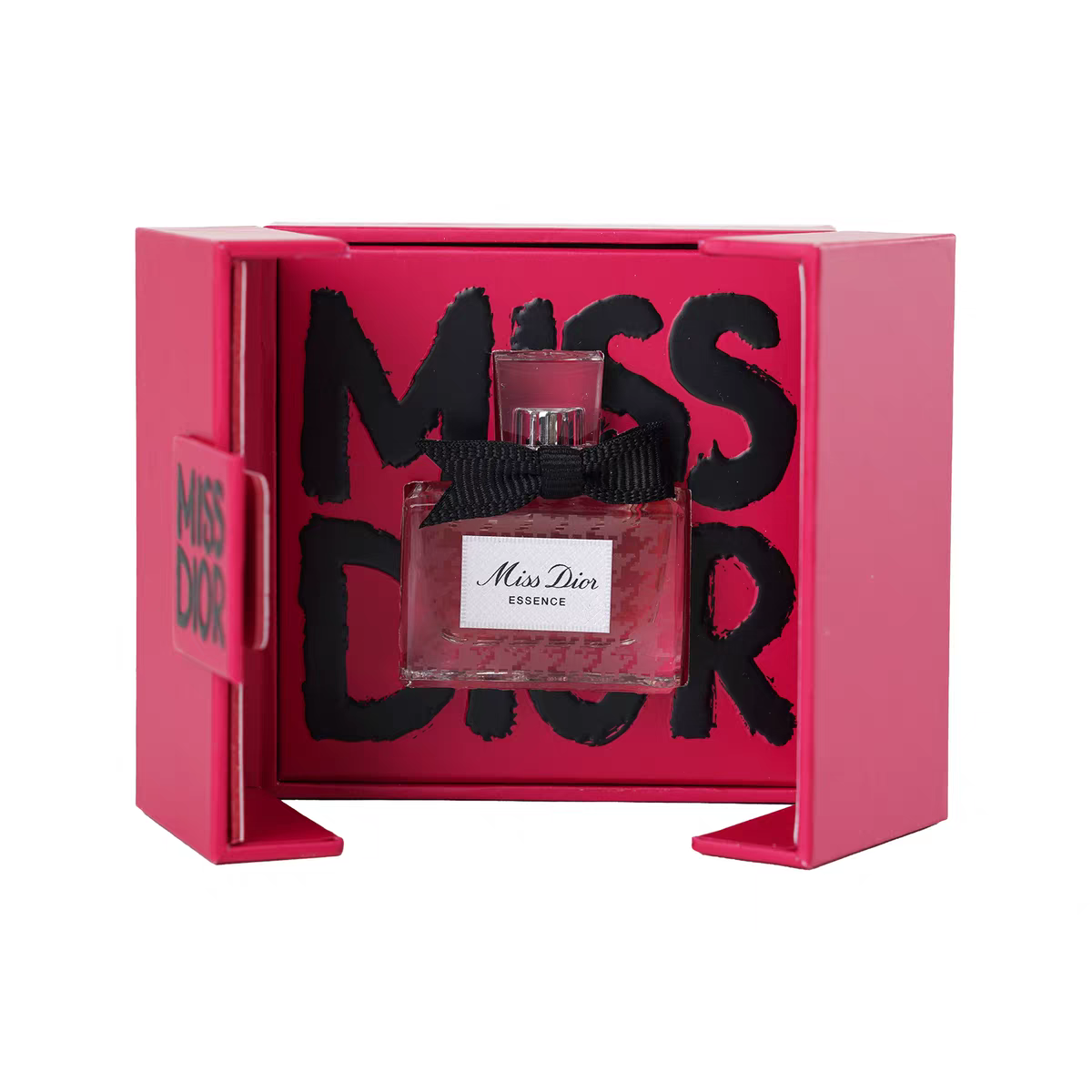
What Makes Luxury Perfume Packaging Different?
Perfume packaging has a particularly demanding combination of requirements.
The bottle may be heavy, unusually shaped or made from thick glass. A cap can add significant height to the finished product. Some bottles have rounded shoulders, protruding collars or decorative components that require additional clearance inside the box.
At the same time, the packaging often needs to communicate a premium brand image before the consumer even opens it.
A well-designed perfume box therefore needs to balance four things:
- Protection — the bottle must remain secure inside the box.
- Dimensional accuracy — the internal structure must accommodate the actual bottle rather than a generic bottle size.
- Brand presentation — materials, printing and finishing should reflect the positioning of the fragrance.
- Production feasibility — the design must be practical to manufacture consistently at the required quantity.
For luxury fragrances, these considerations are closely connected. Changing the bottle height can affect the box height; changing the box structure can affect the required board thickness; and changing the board or wrapping material can alter the final dimensions and appearance.
Start With the Perfume Bottle Dimensions
The most important information for developing a perfume box is the actual product dimension.
For a typical perfume bottle, we recommend providing:
- Bottle length
- Bottle width
- Overall bottle height
- Cap height
- Bottle weight
- Shape and profile
- Any protruding components
- Required quantity per box
The overall height deserves particular attention.
Packaging Heights for Custom Perfume Boxes
The height of a perfume box should not be determined simply by adding a small amount of empty space above the bottle.
The actual calculation depends on the box structure and the way the bottle is retained inside it.
For example, a bottle with a tall decorative cap may require more internal clearance than the glass bottle itself. If the box includes a paperboard insert, EVA insert or other internal support, the insert thickness also becomes part of the dimensional calculation.
A simplified dimensional relationship is:
Internal box height = product height + required clearance + insert allowance
The same principle applies to length and width.
The goal is not to make the box as tight as possible. It is to create enough controlled space for protection while avoiding excessive movement inside the package.
Too much clearance can allow the bottle to shift during transportation. Too little clearance can create pressure on the bottle or make assembly difficult.
For this reason, the final box dimensions should be confirmed from the physical product or accurate technical drawings whenever possible.
How to Choose the Perfect Custom Perfume Box: Dimensions, Right Structure, Materials & Finishes
The box structure has a major influence on how a perfume brand is perceived.
Different structures can be appropriate for different positioning and price levels.
Rigid Perfume Boxes
Rigid boxes are widely used for premium and luxury fragrances because their substantial board construction creates a strong, high-end presentation.
They can be developed in several configurations, including:
- Two-piece rigid boxes
- Magnetic closure boxes
- Shoulder-neck boxes
- Drawer-style boxes
- Custom rigid structures with integrated inserts
A rigid structure is particularly suitable when the packaging itself is intended to become part of the unboxing experience.
For products that require a more refined opening experience, the relationship between the outer box, inner tray and bottle insert can be engineered as one complete packaging system rather than treating the insert as an afterthought.
Folding Carton Perfume Boxes
Folding cartons provide a lighter and more cost-efficient alternative while still offering considerable design flexibility.
They are suitable for many retail perfume applications where shipping volume, storage efficiency and production cost are important considerations.
High-quality paperboard, precise printing and carefully selected finishing can create a premium appearance without the construction of a rigid box.
The choice between rigid and folding construction should therefore be based on the product’s positioning, distribution requirements, quantity and target packaging cost—not simply on appearance.
Custom Perfume Packaging for Exclusive Collections
A perfume collection often contains several fragrances that share the same brand identity but have different bottle sizes, names or visual themes.
This creates a different packaging challenge.
The boxes do not necessarily need to be identical. They need to look like they belong to the same collection.
A collection can maintain consistency through a shared system of:
Box structure
- Logo position
- Typography
- Paper selection
- Color palette
- Foil treatment
- Interior construction
- Overall proportions
At the same time, individual fragrances can be differentiated through color, artwork, foil colors or printed information.
This approach is particularly effective for exclusive perfume collections, limited editions and fragrance ranges with multiple SKUs.
Instead of designing every box independently, it is often more efficient to establish a packaging system first and then adapt the dimensions and graphics for each fragrance.
That approach can also simplify future product launches.
Materials for Luxury Perfume Boxes
The outer material contributes significantly to the tactile quality of perfume packaging.
Common options include:
Coated Papers
Coated papers provide a smooth surface suitable for high-quality offset printing. They can be used when detailed artwork, photography or precise color reproduction is important.
Textured Papers
Textured papers introduce visual and tactile depth without relying entirely on decorative finishing.
They are particularly useful for fragrance brands that want a more sophisticated or artisanal appearance.
Specialty Papers
Pearlescent, metallic, colored and other specialty papers can create a distinctive surface before any printing or finishing is added.
The paper itself can become part of the brand identity.
Wrapped Rigid Box Materials
Rigid perfume boxes commonly use printed or specialty paper wrapped around a rigid board structure.
This construction provides considerable flexibility in combining board thickness, paper texture, printing and finishing.
Material selection should always be considered together with the intended printing and finishing process.
Custom Printed Perfume Boxes
Printing is where the visual identity of a fragrance brand becomes physical packaging.
For detailed artwork, offset printing is generally suitable for reproducing fine typography, gradients, illustrations and complex graphics.
Depending on the design, additional processes may include:
- CMYK printing
- Pantone spot colors
- White ink
- Metallic printing effects
- Silk screen printing
- Custom interior printing
However, printing should not be considered separately from the substrate.
The same artwork can appear substantially different on a coated paper, textured paper or dark specialty paper. When a brand uses very specific colors, the paper surface and printing method need to be evaluated together.
Surface Finishes for Perfume Packaging
Surface finishing changes both the appearance and tactile experience of the box.
Common options include:
Soft-touch lamination
Creates a smooth, velvety tactile surface and is often used for premium cosmetic and fragrance packaging.
Matte lamination
Reduces surface reflection and creates a restrained, sophisticated appearance.
Gloss lamination
Provides a brighter surface with stronger visual contrast.
Spot UV
Adds selective gloss to logos, patterns or graphic elements.
Embossing and debossing
Creates physical depth and can make a logo or decorative pattern more tactile.
The best results usually come from combining finishes selectively rather than applying every available effect.
For example, a dark matte box with a subtle embossed logo and a restrained metallic foil can communicate luxury more effectively than a box covered with multiple competing finishes.
Custom Perfume Boxes With Foil Logos
A foil logo is one of the most recognizable finishing techniques in premium fragrance packaging.
Gold and silver foil are common choices, but the available effects extend well beyond traditional metallic finishes.
Depending on the visual direction, a perfume box may use:
- Gold foil
- Silver foil
- Colored foil
- Holographic foil
- Matte foil
- Combination foil and embossing
The position and scale of the logo also matter.
A small centered logo on an uncoated or textured paper can create a completely different impression from a large metallic logo combined with a laminated surface.
For minimalist fragrance packaging, the restraint of a single foil logo can sometimes create a stronger result than using several decorative effects at once.
Designing the Interior of a Perfume Box
The exterior attracts attention, but the interior is responsible for holding the product securely and presenting it correctly.
The insert should be designed around the actual bottle geometry.
Depending on the product and budget, the interior may use:
- Paperboard inserts
- Wrapped board inserts
- EVA foam
- Molded pulp
- Fabric or specialty paper lining
- Custom cavities for irregular bottle shapes
The insert should prevent unnecessary movement while allowing the product to be removed without excessive force.
For luxury fragrances, the interior material should also complement the exterior. A beautifully finished outer box paired with a poorly fitted or visually inconsistent insert can undermine the overall experience.
Designing Packaging for Different Perfume Bottle Sizes
A fragrance brand may eventually have several bottle formats, such as 30 ml, 50 ml and 100 ml.
Using one proportional design system across different sizes can make the collection feel cohesive.
However, scaling a box mathematically is not always the best solution.
The bottle itself may change shape between sizes. A 100 ml bottle may be taller, wider or proportionally different from a 30 ml bottle. The insert therefore needs to be redesigned around the actual product rather than simply enlarged.
For a growing fragrance collection, it is useful to define a packaging architecture early:
Bottle → Insert → Box Structure → Exterior Dimensions → Graphics → Finishing
This allows new SKUs to be added without losing the visual identity established by the original packaging.
Custom Perfume Box Printing and Finishing Should Be Planned Together
A common mistake in packaging development is to finalize the box structure first and decide on finishing later.
In practice, the two should be developed together.
For example:
- A textured paper may already provide enough visual interest without heavy finishing.
- A dark paper may require white ink before CMYK printing.
- Fine foil details may require sufficient line thickness and appropriate artwork preparation.
- Embossing may influence the position of printed elements.
- A soft-touch surface can change the tactile character of metallic foil.
This is why packaging development is more than selecting a box style from a catalog.
The structure, material, artwork and finishing process need to be evaluated as one system.
What to Provide When Requesting a Custom Perfume Box Quote
A packaging manufacturer can provide a much more accurate quotation when the initial specification includes the key technical information.
Ideally, provide:
- Perfume bottle dimensions
- Bottle photos or technical drawings
- Box style or structural reference
- Preferred materials
- Printing requirements
- Logo and artwork requirements
- Finishing requirements
- Insert requirements
- Quantity
- Target delivery date
If the final artwork is not ready, this does not necessarily prevent the project from starting.
The bottle dimensions and packaging structure can often be evaluated first, while the final graphics and finishing details are developed later.
From Concept to Production
A successful perfume packaging project normally develops through several stages.
1. Product Assessment
The bottle dimensions, shape, weight and closure are reviewed first.
2. Structural Development
The box dimensions, opening style and insert are developed around the actual product.
3. Material and Finish Selection
Paper, board, printing and finishing are selected according to the desired appearance and budget.
4. Prototype
A structural or finished sample can be produced to verify dimensions, appearance and assembly.
5. Production
After the specifications and artwork are approved, the packaging proceeds to mass production.
6. Quality Control
Key points include dimensional accuracy, print quality, foil registration, surface finishing, insert fit and overall assembly.
This process is particularly important for luxury fragrance packaging because small dimensional or finishing inconsistencies can become highly visible on a premium product.
Frequently Asked Questions
1. What is the most important factor when designing a custom perfume box?
The bottle dimensions—especially the overall height, including the cap. Box size, insert dimensions and internal clearance all depend on accurate product measurements. Whenever possible, start with the physical bottle or technical drawings.
2. How do I calculate the correct height for my perfume box?
A useful starting point is:
Internal box height = product height (bottle + cap) + required clearance + insert allowance
The required clearance depends on the box structure and insert design. The goal is to prevent unnecessary movement without making the packaging too tight or difficult to assemble.
3. What are the main structural options for luxury perfume packaging?
Common options include rigid boxes, magnetic closure boxes, drawer boxes and folding cartons. The appropriate structure depends on the bottle, brand positioning, desired opening experience, production quantity and packaging budget.
4. Which materials and finishes work best for high-end perfume boxes?
Coated papers work well for detailed, vibrant printing, while textured and specialty papers can provide a more tactile appearance. Wrapped rigid board is commonly used for premium rigid boxes. Popular finishes include soft-touch lamination, matte lamination, spot UV and foil stamping in gold, silver or other effects. The most effective combinations are usually selective rather than excessive.
5. Can I get a prototype or sample before mass production?
Yes. A structural or finished prototype can be used to verify dimensions, insert fit, print quality, foil registration and assembly before mass production. Sampling is particularly valuable for luxury fragrance packaging, where small structural or finishing details can have a significant visual impact.
6. What information should I provide to get an accurate quote?
Useful information includes the bottle length, width, overall height, cap height and weight, along with product photos or technical drawings. You can also provide the preferred box style, material, printing and finishing requirements, insert type, quantity and target delivery date. Final artwork is not always required to begin structural development.
Build the Perfume Packaging Around the Brand
What should the customer experience when they first hold the fragrance?
That experience is shaped by a series of connected decisions: the proportions of the box, the resistance of the opening, the texture of the paper, the position of the logo, the way the bottle is held inside the insert, and even how the interior is revealed.
A luxury perfume box should therefore be treated as part of the fragrance’s product design—not simply as secondary packaging.
Whether you are developing a single premium perfume, a collection of fragrances, or a fully customized packaging system, the right solution should balance product protection, structural precision, brand identity and manufacturing practicality.
If you are developing a new fragrance line, the bottle dimensions, product photos and desired packaging direction are the best starting points for determining the appropriate box structure, insert, material and finishing combination.
Have a Perfume Packaging Project in Development?
Send us your bottle dimensions, product photos or packaging requirements. We can recommend a suitable box structure, insert and finishing combination for your project.
Contact us today to discuss your packaging project and get exclusive perfume packaging solutions