
Printing and Packaging Paper Types: Complete Guide to Paper & Paperboard
Why Paper Selection Matters in Packaging
Paper selection is one of the most important decisions in printed packaging.
The same artwork can produce very different results when printed on coated art paper, uncoated Kraft, SBS paperboard, textured specialty paper, or a rigid greyboard structure. Differences in surface, fibre composition, stiffness, ink absorption, thickness, and finishing compatibility can affect everything from colour reproduction and tactile quality to structural performance and production cost.
For packaging buyers, choosing a substrate is therefore not simply a matter of selecting the highest GSM or the most expensive paper.
The right substrate must match the application, structure, printing method, finishing process, product weight, protection requirements, logistics, sustainability objectives, and target market.
This guide explains the major paper and paperboard categories used in commercial printing and packaging production. It also explains how to compare GSM and thickness, when to choose coated versus uncoated stocks, how SBS differs from FBB, and what buyers should confirm before placing a packaging order.
1. Paper vs. Paperboard: What’s the Difference?
Before comparing individual materials, it is important to understand the distinction between paper and paperboard.
Paper
Paper is generally thinner and more flexible. It is commonly used for:
- Printed inserts
- Booklets
- Flyers
- Catalogues
- Tissue paper
- Wrapping paper
- Shopping bags
- Labels and other printed components
Paperboard
Paperboard is thicker and more rigid than conventional printing paper. It is widely used for:
- Folding cartons
- Product boxes
- Gift packaging
- Cards and tags
- Display packaging
- Inserts
- Premium retail packaging
Rigid Board
Rigid packaging uses an even thicker structural board, commonly called greyboard, chipboard, or rigid board. Instead of being printed directly in most luxury applications, it is usually wrapped with a printed or specialty paper.
This distinction matters because a 300gsm folding carton board and a 2mm rigid greyboard may both be described casually as “cardboard,” but they perform very different functions.
Paper provides printability and flexibility. Paperboard provides structure. Rigid board provides structural strength for setup packaging.
2. GSM vs. Thickness: What Does Paper Weight Actually Mean?
One of the most common mistakes in packaging specifications is treating GSM and thickness as interchangeable.
What Is GSM?
GSM means grams per square metre.
A 300gsm sheet weighs 300 grams per square metre.
GSM is useful for comparing the weight of paper and paperboard, but it does not directly tell you how thick or stiff the material will be.
What Is Caliper?
Caliper refers to the physical thickness of a paper or board, usually expressed in:
- mm
- microns
- points
Rigid board is normally specified by thickness because structural performance depends heavily on board caliper.
For example:
- 1.0mm rigid board(700~800 g/m²)
- 1.5mm rigid board(1000~1200 g/m²)
- 2.0mm rigid board(1400~1600 g/m²)
- 2.5mm rigid board(1750~2000 g/m²)
- 3.0mm rigid board(2100~2400 g/m²)
The relationship between GSM and thickness varies by paper composition and density.
Why This Matters
Two boards with similar GSM can have different thickness and stiffness.
Conversely, two papers with similar thickness can have different weights.
For packaging development, buyers should therefore specify both grammage and caliper when relevant, rather than assuming GSM alone determines performance.
3. Coated Printing Papers
Coated papers are manufactured with a coating layer that creates a smoother and more controlled printing surface.
They are widely used when brands require sharp images, strong colour reproduction, and a refined visual appearance.
3.1 Gloss Art Paper
Gloss art paper has a smooth, bright and highly reflective surface.
Typical Applications
- Commercial brochures
- Magazines
- Catalogues
- Product literature
- Folding cartons
- Gift bags
- Promotional materials
Typical Weight Range
Approximately 80–350gsm, depending on the specific grade and application.
Printing Characteristics
Gloss art paper provides a smooth surface for high-quality offset printing and is particularly suitable for:
- Product photography
- Fine graphics
- Gradients
- Detailed illustrations
- Full-colour CMYK printing
It also generally works well with common post-printing treatments such as lamination and UV coating.
For packaging projects, however, the final result depends not only on the paper but also on the coating, ink system, finishing process, and converting method.
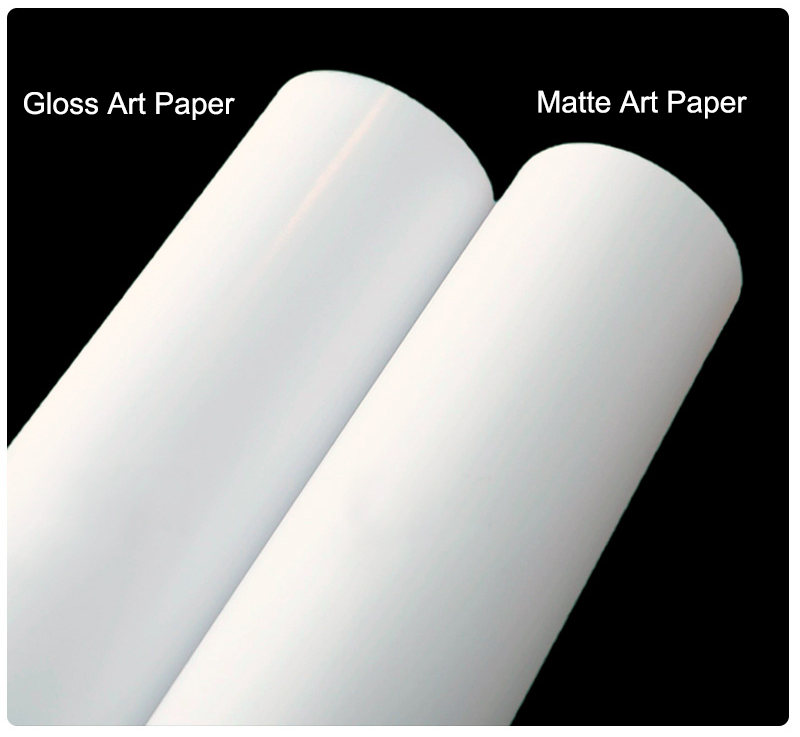
3.2 Matte Art Paper
Matte art paper has a coated but non-glossy surface.
Compared with gloss art paper, it produces less reflected light and is often preferred for premium publications and packaging where a quieter, more sophisticated appearance is desired.
Typical Applications
- Luxury catalogues
- Premium brochures
- Art books
- High-end presentation materials
- Premium packaging
Advantages
- Reduced glare
- Smooth printing surface
- Good image reproduction
- Refined visual appearance
- Suitable for premium branding
Matte art paper is also compatible with many premium finishing techniques, although the exact performance of foil stamping, embossing, coating, and lamination should always be confirmed with production samples.
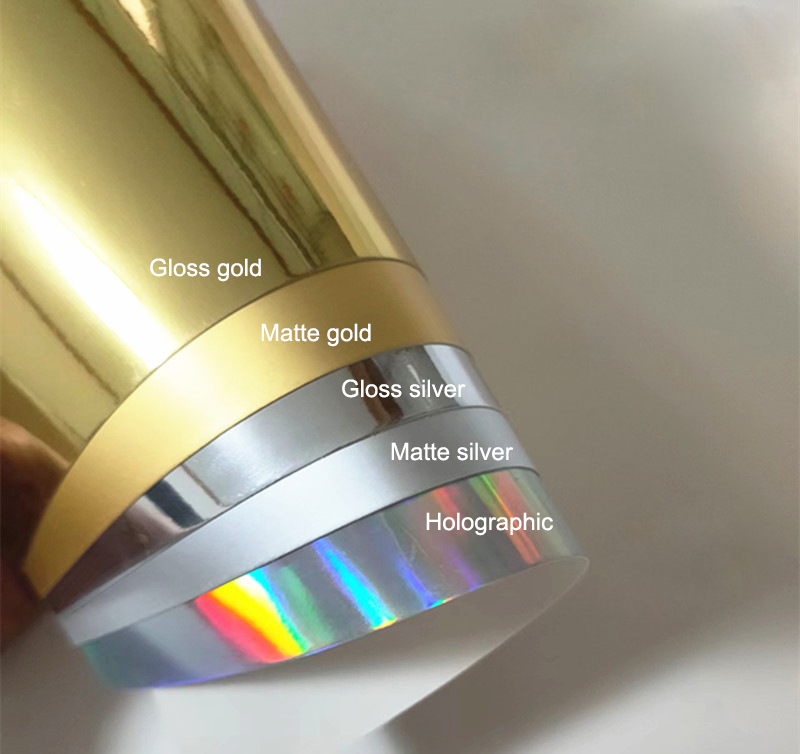
3.3 Metallic Paper
Metallic paper uses a metallic-looking surface, which may be produced through metallized layers, coatings, pigments, or laminated constructions depending on the specific product.
It is frequently used for:
- Luxury packaging
- Cosmetics
- Perfume packaging
- Gift packaging
- Premium labels
- Seasonal packaging
Metallic substrates require additional attention during printing because the underlying reflective surface affects colour appearance.
A white ink or opaque white base may be required when process colours need to appear closer to their intended appearance.
Before production, always test:
- Ink adhesion
- Colour reproduction
- White ink coverage
- Foil compatibility
- Coating compatibility
Metallic paper should therefore be treated as a specialty substrate rather than simply a decorative version of ordinary coated paper.
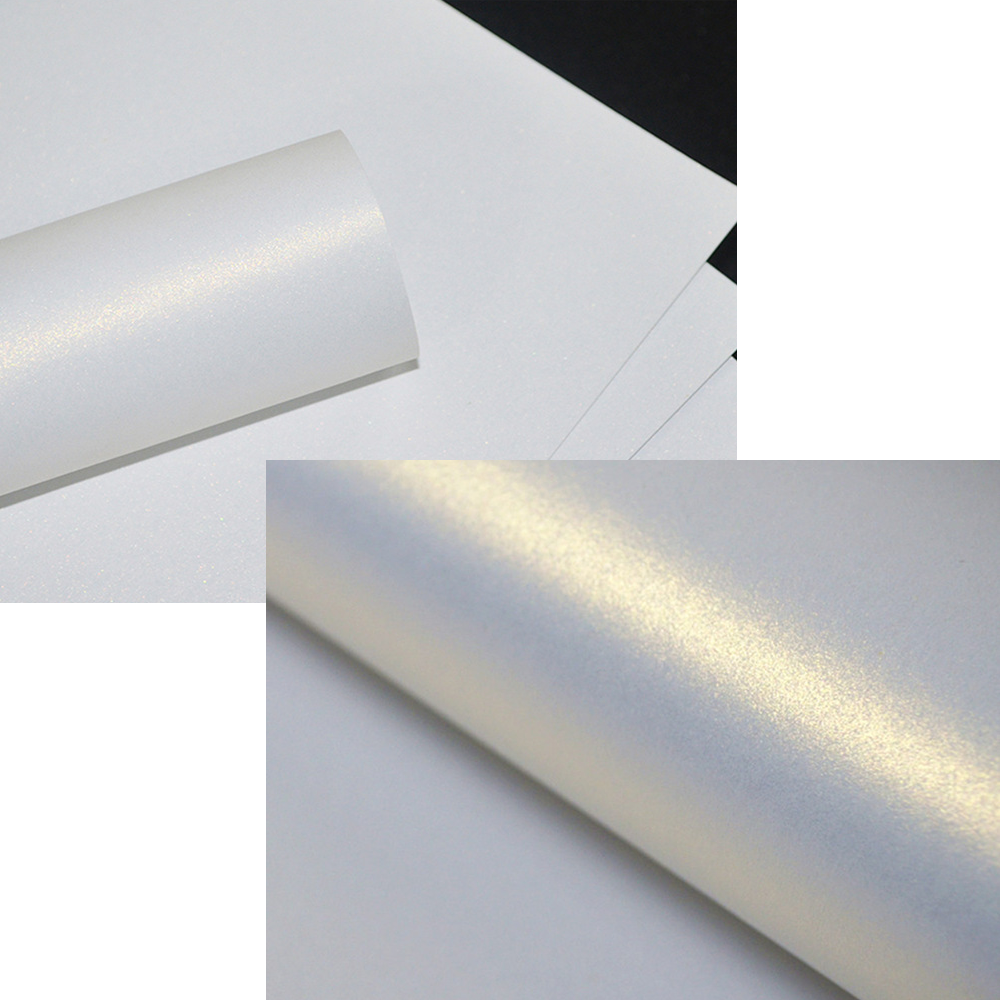
3.5 Pearl and Pearlescent Paper
Pearlescent paper contains a reflective surface that creates a subtle luminous or shimmering appearance.
It is often selected for:
- Luxury invitations
- Premium greeting cards
- Beauty packaging
- Fragrance packaging
- High-end brochures
- Hang tags
Because reflective surfaces can reduce contrast, very small text and fine graphic elements should be evaluated carefully before mass production.
Pearlescent papers are particularly effective when the design relies on material appearance rather than heavy full-colour printing.
4. Uncoated Printing & Packaging Papers
Uncoated papers do not have the same smooth coating layer found on art papers.
Their surface usually produces greater ink absorption and a more natural tactile appearance.
This can be an advantage for brands seeking:
- Natural aesthetics
- Sustainable positioning
- Tactile packaging
- Minimalist design
- Premium textured appearance
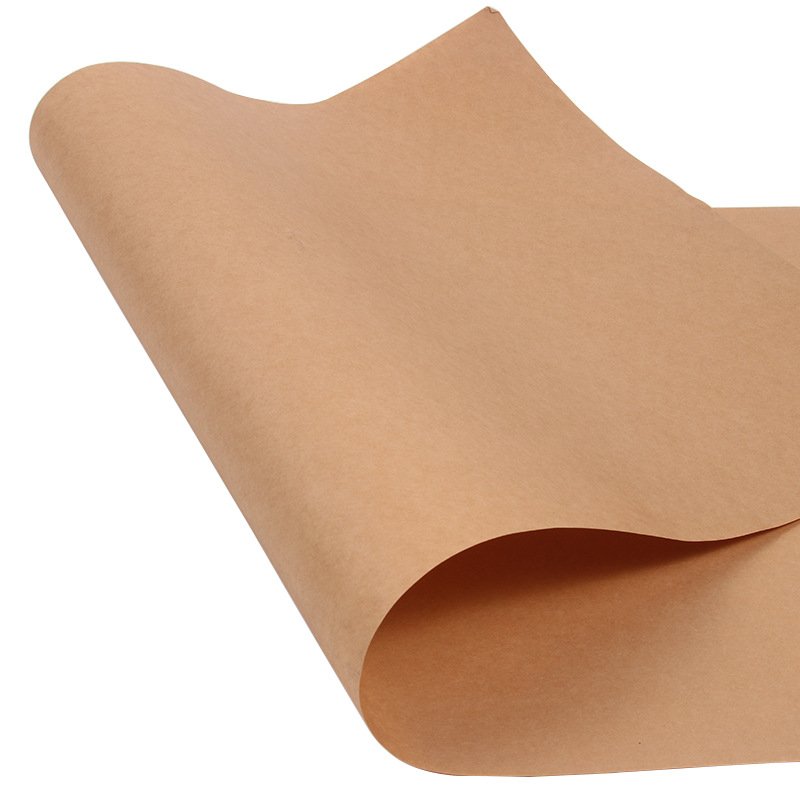
4.1 Kraft Paper
Kraft paper is widely used where strength, natural appearance, and sustainability positioning are important.
Typical applications include:
- Shopping bags
- Gift bags
- Wrapping
- Envelopes
- Food-service packaging
- E-commerce packaging
- Industrial packaging
Natural Kraft is typically brown, while bleached grades can provide a lighter or white appearance.
Printing Considerations
The natural colour of Kraft affects printed colours.
A design printed directly onto brown Kraft may appear:
- Less saturated
- Warmer
- Darker
- More natural
If accurate brand colours or bright graphics are required, a white base, bleached Kraft, coating, or laminated surface may be more appropriate depending on the construction.
Kraft paper is known for good strength and tear resistance, but ordinary Kraft paper should not automatically be described as waterproof. Moisture-resistant and grease-resistant versions are available through appropriate grades, coatings, or treatments.
4.2 White Kraft Paper
White Kraft combines the structural characteristics of Kraft paper with a brighter printable surface.
It is commonly used for:
- Retail shopping bags
- Luxury carrier bags
- Gift bags
- Retail packaging
- Envelopes
- Paper pouches
White Kraft is often selected when a brand wants the natural positioning associated with Kraft while retaining better colour reproduction than brown Kraft.
For high-colour designs, however, the exact surface and whether lamination or coating is required should be evaluated through a production sample.
5. Packaging Paperboards
Packaging board differs from ordinary printing paper because stiffness and structural performance become important.
The most relevant grades for packaging buyers include SBS, FBB, duplex board, and rigid greyboard.
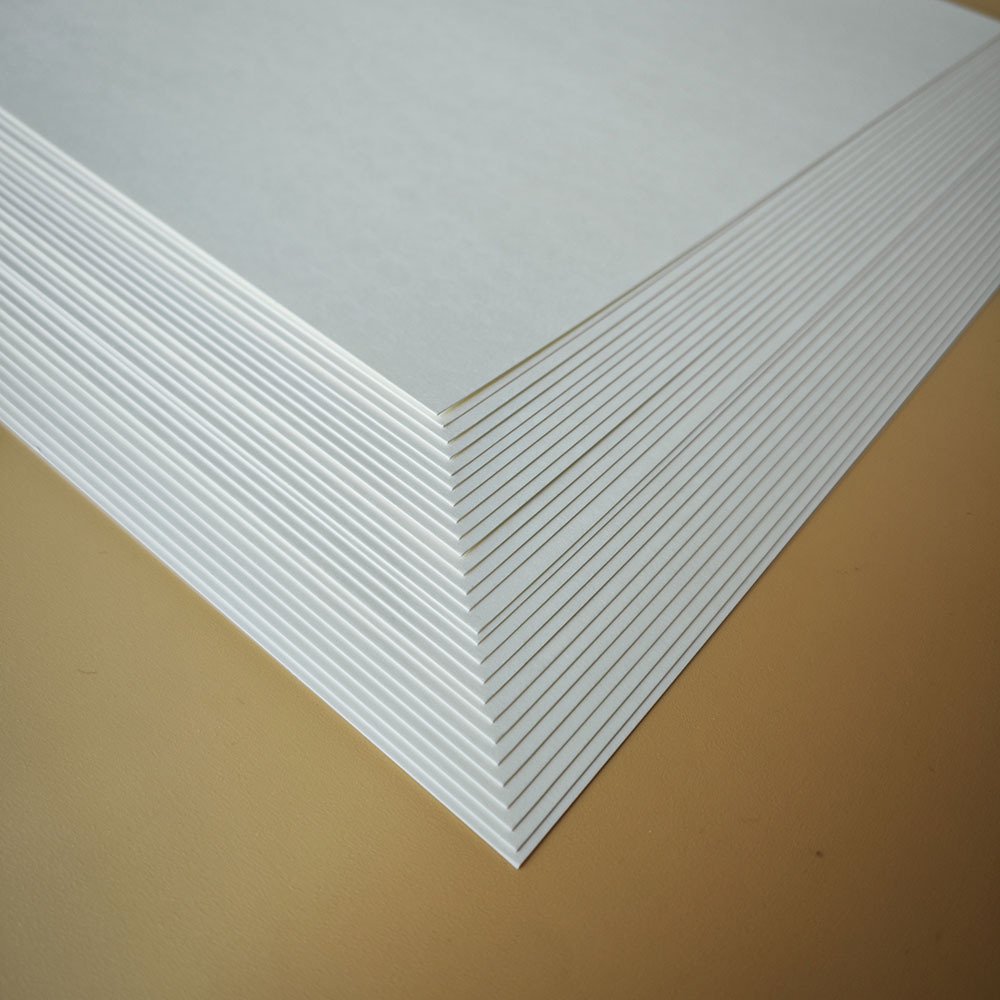
5.1 SBS — Solid Bleached Sulfate Board
SBS is a premium paperboard manufactured from bleached virgin chemical pulp.
It is known for:
- Excellent printability
- Smooth surface
- High brightness
- Good stiffness
- Consistent surface quality
Typical Applications
- Premium folding cartons
- Cosmetics packaging
- Perfume packaging
- Pharmaceutical cartons
- Food cartons
- Premium gift packaging
- Hang tags
Typical commercial grades often fall around 200–400gsm, depending on application and supplier.
SBS is particularly attractive when packaging requires a combination of high-quality graphics, clean white appearance, structural stiffness, and premium finishing.
It is commonly compatible with:
- Offset printing
- Foil stamping
- Embossing
- Debossing
- UV coating
- Lamination
- Die-cutting
For direct food-contact applications, the specific board grade and complete packaging construction must be evaluated against the applicable regulations rather than assuming that all SBS is automatically food-contact compliant.
5.2 FBB — Folding Box Board
Folding Box Board, commonly abbreviated as FBB, is another important substrate for folding cartons.
FBB is engineered specifically for folding carton applications and typically combines:
- A smooth printable surface
- Good stiffness
- Relatively low weight
- Good folding performance
Typical Applications
- Cosmetics cartons
- Perfume cartons
- Healthcare packaging
- Food cartons
- Personal care packaging
- Premium retail packaging
FBB is particularly useful when a brand needs to balance print quality, folding performance, stiffness, and material efficiency.
5.3 SBS vs. FBB: Which Is Better?
There is no universal winner.
The better choice depends on the packaging structure and production requirements.
| Requirement | SBS | FBB |
|---|---|---|
| Premium print appearance | Excellent | Excellent |
| Folding carton applications | Excellent | Excellent |
| Surface smoothness | Excellent | Excellent |
| Stiffness-to-weight efficiency | High | High |
| Premium cosmetics | Excellent | Excellent |
| Perfume cartons | Excellent | Excellent |
| Folding performance | Good | Excellent |
| Material optimization | Good | Excellent |
For a luxury cosmetic or perfume carton, either can be an excellent choice.
The decision should be based on the specific board grade, caliper, structure, printing requirements, finishing, product weight, and target cost.
5.4 Duplex Board / Grey-Backed White Board
Duplex board generally has a printable white-coated surface and a grey reverse or grey core, depending on the grade.
It is often selected where cost efficiency is more important than a fully premium appearance.
Typical Applications
- Standard folding cartons
- Retail packaging
- Tags
- Display packaging
- Inner packaging components
Because duplex board is available in different constructions and recycled content levels, food-contact suitability must be evaluated according to the specific grade, coating, inks, adhesives, recycled content, and applicable regulations.
Do not classify all duplex board as either universally food-safe or universally unsuitable for food contact.
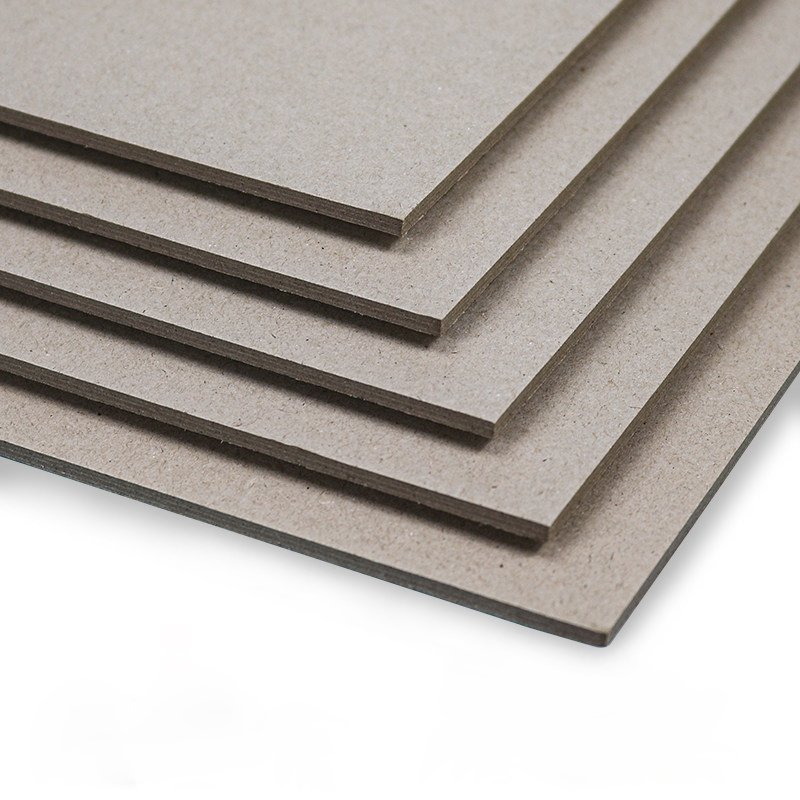
5.5 Grey Chipboard / Rigid Board
Grey chipboard is a dense structural board made largely from recycled paper fibres.
Unlike SBS or FBB, it is normally selected primarily for rigidity rather than direct printing quality.
It is widely used in:
- Rigid boxes
- Magnetic boxes
- Book-style boxes
- Drawer boxes
- Premium gift boxes
- Luxury presentation packaging
- Internal structural supports
Rigid board is normally specified by thickness rather than GSM.
Common thicknesses include:
- 1.0mm
- 1.2mm
- 1.5mm
- 2.0mm
- 2.5mm
- 3.0mm
For luxury rigid packaging, the greyboard is usually wrapped with printed art paper, specialty paper, Kraft, textured paper, or another decorative covering material.
This creates an important distinction:
The structural board determines rigidity; the wrapping paper determines much of the visual and tactile appearance.
This is why rigid box material selection should always consider the board and surface paper as a system, rather than evaluating them independently.
6. Corrugated Board
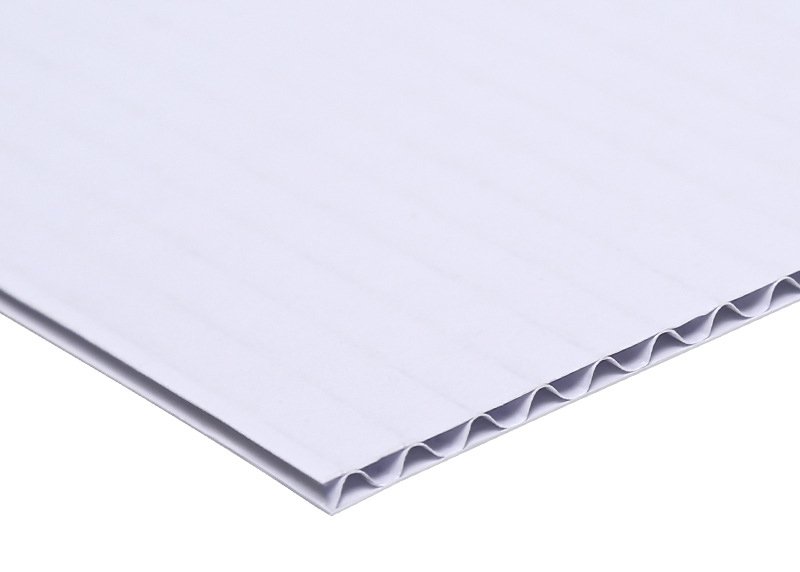
Corrugated board is a structural paper-based material made by combining linerboard with one or more fluted mediums.
Common flute profiles include:
- A flute
- B flute
- C flute
- E flute
- F flute
Combinations such as BC and BE are also used in double-wall constructions.
Typical Applications
- Shipping cartons
- E-commerce boxes
- Protective outer packaging
- Retail displays
- Product inserts
- Transport packaging
Corrugated board is valued for its strength-to-weight ratio, cushioning, stacking performance, and logistics efficiency.
For premium printed packaging, the outer liner may be selected specifically to provide a smoother printing surface.
Flexographic printing is common for corrugated packaging, while laminated constructions can support higher-quality offset printing when premium graphics are required.
7. Textured / Specialty & Designer Papers
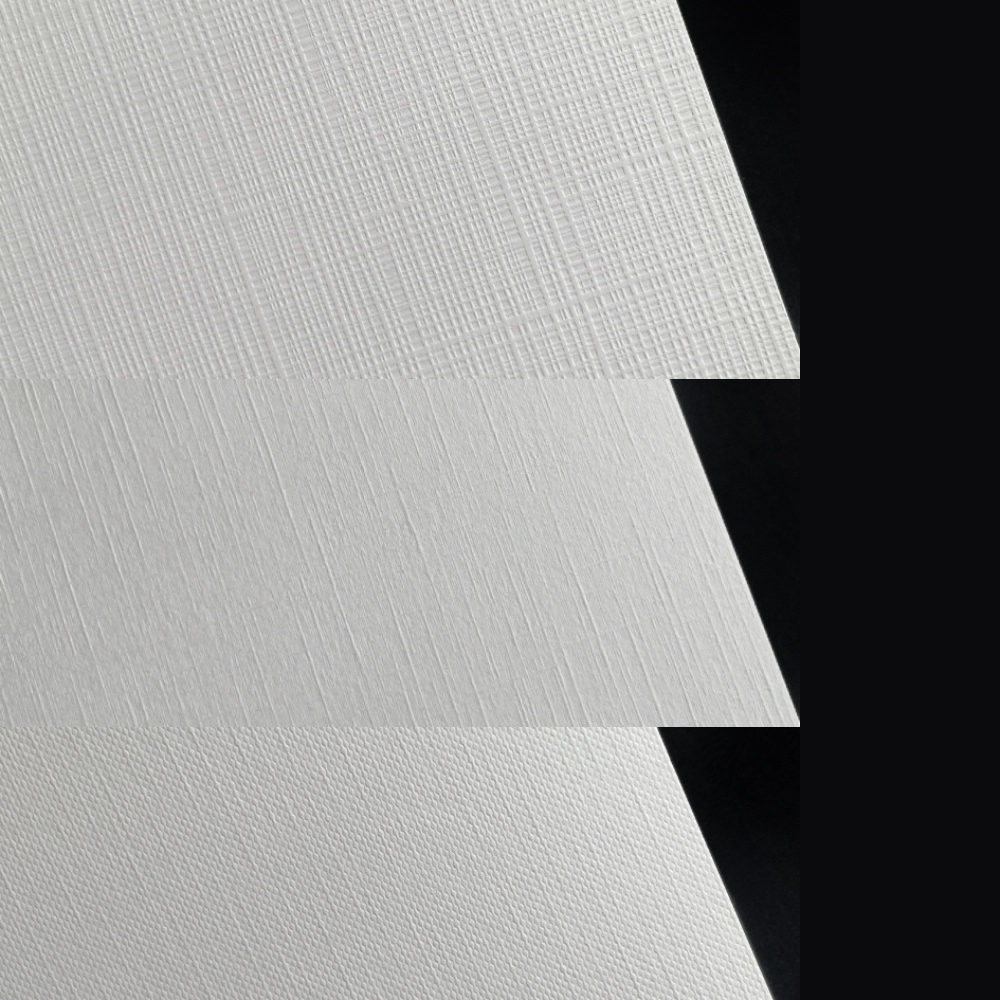
Specialty papers are selected primarily for their tactile or visual character.
They include:
- Textured papers
- Linen papers
- Felt-marked papers
- Laid papers
- Coloured stocks
- Metallic-effect papers
- Pearlescent papers
- Embossed papers
These materials are particularly relevant to luxury packaging because the substrate itself becomes part of the brand experience.
Printing Considerations
Highly textured papers can interfere with:
- Fine type
- Small graphic details
- High-resolution gradients
- Large solid ink areas
In many luxury applications, the best result comes from combining specialty paper with selective decorative techniques such as:
- Foil stamping
- Embossing
- Debossing
- Blind embossing
rather than relying entirely on detailed process-colour printing.
8. Black Paper & Black Cardstock
Black paper and black cardstock are specialty substrates commonly used for premium packaging, luxury stationery, product cards, tags, invitations, and presentation materials.
Unlike white or light-coloured paper, black substrates can significantly affect the appearance of printed colours. The black base may reduce colour brightness and saturation, making conventional CMYK printing unsuitable for designs that require bright or opaque colours.
For premium packaging, black paper is often combined with:
- White ink
- Metallic inks
- Gold or silver foil stamping
- Embossing
- Debossing
- Blind embossing
Black paper is particularly effective for luxury designs where the contrast between a dark substrate and a metallic or white decorative element is part of the visual identity.
What to Consider When Choosing Black Paper
Black paper is available in different weights, thicknesses, textures, and surface finishes. Some grades are coloured throughout the sheet, while others may have a different internal structure or surface treatment.
For packaging applications, buyers should evaluate:
- Paper thickness and stiffness
- Whether the black colour runs through the sheet
- Surface texture
- Printing method
- Ink opacity
- Foil compatibility
- Embossing performance
- Folding and creasing requirements
For example, a black cardstock intended for a premium product card may have very different requirements from a black paper used as the wrapping material for a rigid box.
9. Coated vs. Uncoated Paper: Which Should You Choose?
This is one of the most important decisions in packaging production.
| Requirement | Coated Paper | Uncoated Paper |
|---|---|---|
| Sharp image reproduction | Excellent | Good |
| Colour saturation | High | More muted |
| Smoothness | High | Natural |
| Tactile character | Moderate | Strong |
| Natural appearance | Moderate | Excellent |
| Photography | Excellent | Less suitable |
| Premium minimalist design | Excellent | Excellent |
| Kraft-style branding | Limited | Excellent |
| Fine detailed graphics | Excellent | Grade-dependent |
Choose coated paper when:
- Photography is important
- Bright colours are required
- Fine graphics dominate the design
- Smoothness is important
- The package needs a polished appearance
Choose uncoated paper when:
- Natural texture is important
- Sustainability positioning is central
- A tactile surface is desired
- Muted colours support the brand identity
- Kraft or specialty paper is part of the visual concept
The “best” paper is therefore not necessarily the paper with the highest print quality.
It is the paper that best supports the brand, structure, printing process, finishing, product, and budget together.
10. Paper Selection for Luxury Packaging
Luxury packaging requires a different approach from ordinary commercial printing.
The substrate contributes directly to:
- Perceived quality
- Tactile experience
- Colour appearance
- Structural performance
- Foil adhesion
- Embossing definition
- Unboxing experience
For example, a luxury perfume package may combine:
Rigid greyboard + coated or specialty wrapping paper + soft-touch finish + foil stamping + embossed logo + custom insert
The visual result is not created by one material alone.
It is the interaction between the substrate, printing, finishing, structure, and assembly.
This is why paper selection should happen early in the packaging development process rather than after the artwork has already been finalized.
11. Choosing Paper for Folding Cartons
Folding cartons normally require a board that balances:
- Printability
- Folding performance
- Stiffness
- Die-cutting
- Creasing
- Finishing
- Product protection
SBS and FBB are common premium choices.
For cosmetics and perfume packaging, the board should also be evaluated against:
- Product weight
- Bottle or container dimensions
- Required structural strength
- Closure style
- Window requirements
- Printing coverage
- Foil stamping
- Embossing
- Lamination or coating
A folding carton should therefore be engineered as a complete structure, not selected solely by GSM.
12. Choosing Paper for Rigid Boxes
Rigid boxes use a different material architecture.
A typical construction consists of:
Rigid board → adhesive → wrapping paper → printing/finishing → structural assembly
The rigid board provides the core strength, while the wrapping paper provides most of the visible surface.
Typical wrapping options include:
- Coated art paper
- Matte paper
- Textured paper
- Kraft paper
- Metallic paper
- Specialty designer paper
The correct combination depends on the required appearance, box dimensions, product weight, opening structure, and finishing.
For premium perfume, cosmetics, jewelry, and gift packaging, rigid board can provide a substantially different tactile experience from a conventional folding carton.
13. Choosing Paper for Magnetic Closure Boxes
Magnetic closure boxes are generally constructed from rigid board with a decorative outer wrap.
The material system may include:
- Greyboard
- Coated art paper
- Specialty paper
- Kraft paper
- Textured paper
- Magnetic components
- Custom inserts
The paper must work together with the structural construction and finishing process.
For example, a textured paper may provide a stronger luxury appearance, while a smooth coated paper may be better for detailed printing.
Magnetic boxes should therefore be evaluated as a complete packaging system, including board thickness, wrapping paper, magnet placement, closure force, inserts, and finishing.
14. Paper Selection for Perfume & Cosmetic Packaging
Perfume and cosmetics are particularly sensitive to packaging appearance because the package often forms the first physical interaction between the customer and the brand.
Common material choices include:
Perfume Cartons
- SBS
- FBB
- Premium coated board
- Specialty papers
Luxury Perfume Rigid Boxes
- Greyboard
- Art paper
- Textured paper
- Metallic paper
- Specialty wrapping paper
Cosmetic Packaging
- SBS
- FBB
- Kraft board
- Specialty paper
- Recycled paperboard
The final material should reflect the brand’s positioning while also meeting structural and production requirements.
15. Paper Weight & Substrate Selection by Application
The following table provides a starting point rather than a universal specification.
| Application | Common Material Choices | Typical Range / Specification | Main Consideration |
|---|---|---|---|
| Luxury folding carton | SBS / FBB | Approx. 250–400gsm | Print + stiffness |
| Standard folding carton | FBB / Duplex | Approx. 250–400gsm | Cost + structure |
| Luxury rigid box | Greyboard + wrapping paper | Approx. 1.2–3.0mm board | Rigidity + presentation |
| Magnetic rigid box | Greyboard + wrapping paper | Approx. 1.2–3.0mm board | Structure + closure |
| Retail shopping bag | Kraft / White Kraft | Approx. 100–250gsm | Strength + handle performance |
| Printed insert | Offset / Woodfree | Approx. 70–150gsm | Flexibility + print |
| Premium catalogue | Matte / Gloss Art Paper | Approx. 128–250gsm | Image quality |
| Shipping carton | Corrugated Board | By flute / construction | Compression + protection |
| Premium tag | SBS / Specialty Paper | Approx. 250–400gsm | Tactile + finishing |
These ranges are indicative only. The actual specification should be determined by the final structure, dimensions, product weight, printing process, and required performance.
16. Printing Compatibility: Paper Changes the Final Colour
A common packaging mistake is to approve artwork without considering the substrate.
The same CMYK artwork can look different on:
- Gloss coated paper
- Matte coated paper
- White Kraft
- Brown Kraft
- Metallic paper
- Textured specialty paper
Uncoated and Kraft surfaces generally absorb more ink and can produce a softer or less saturated appearance.
Metallic substrates introduce another variable because the reflective surface changes the appearance of printed colours.
For brand-critical colours, consider:
- Pantone spot colours
- White ink
- Proofing
- Press checks
- Material-specific colour testing
Printing should therefore be considered part of material selection, not a completely separate production stage.
17. Finishing Compatibility: Paper Is Only the Starting Point
Premium packaging frequently combines paper selection with surface and decorative finishing.
Common options include:
- Matte lamination
- Gloss lamination
- Soft-touch lamination
- Matte varnish
- Gloss varnish
- UV coating
- Spot UV
- Foil stamping
- Embossing
- Debossing
The substrate affects how these finishes perform.
For example:
- Smooth coated paper generally provides a predictable surface for detailed printing.
- Textured paper can enhance tactile quality but may affect fine printing.
- Metallic substrates require testing for ink adhesion and colour appearance.
- Kraft can create a natural aesthetic but changes printed colour perception.
- Rigid boxes require compatibility between the wrapping paper, adhesive, board, and finishing process.
The best luxury packaging combinations are usually engineered as a complete system rather than selected effect by effect.
18. Food-Contact Paper & Board: Compliance Must Be Verified by Grade
Food-contact packaging requires more than simply choosing a material described as “food grade.”
The actual packaging system may involve:
- Paper or board
- Coatings
- Printing inks
- Adhesives
- Functional barriers
- Processing conditions
- Food type
- Contact time and temperature
For projects targeting China, the relevant paper and paperboard materials should be assessed against applicable requirements including GB 4806.8-2022.
For the United States, applicable FDA requirements may include 21 CFR 176.170 for paper and paperboard in contact with aqueous and fatty foods and 21 CFR 176.180 for dry foods, depending on the intended application.
European food-contact projects may involve Regulation (EC) No 1935/2004 together with applicable national and material-specific requirements.
For a commercial project, buyers should request documentation from the material supplier confirming the suitability of the actual grade and construction for the intended application.
What Should Buyers Ask For?
Depending on the project, request:
- Material specification
- Food-contact declaration or compliance documentation
- Applicable test reports
- Coating information
- Ink and adhesive information
- Migration testing where required
19. FSC & PEFC: What Sustainable Paper Certification Actually Means
FSC and PEFC are widely recognized forest certification systems used in sustainable paper and packaging supply chains.
For packaging buyers, however, it is important to distinguish between:
using FSC-certified material
and
making an FSC-certified product claim.
FSC Chain of Custody certification covers requirements for sourcing, processing, labeling, and selling forest-based products as FSC certified.
Therefore, buyers should not assume that simply purchasing a paper described as “FSC paper” automatically makes every finished packaging product FSC certified.
When FSC certification is commercially important, confirm:
- The paper’s certification status
- Supplier certification
- Chain-of-custody requirements
- Product claim requirements
- Labeling requirements
PEFC may also be relevant depending on the customer’s market and sustainability requirements.
20. Sustainable Packaging: Material Choice vs. Overall Packaging Design
Sustainable packaging is not determined by one word printed on a paper specification.
A more useful approach considers the entire packaging system.
Important factors include:
Material Source
- Virgin fibre
- Recycled fibre
- Certified fibre
- Responsibly sourced materials
Material Efficiency
Can the structure achieve the required performance with less material?
Coatings and Laminations
Do surface treatments affect recycling or end-of-life considerations?
Structural Efficiency
Can the box be redesigned to reduce empty space?
Shipping Efficiency
Can a foldable or flat-packed structure reduce transportation volume?
End-of-Life
Can the package be separated, recycled, or otherwise managed effectively in the target market?
For example, a slightly more expensive board may reduce material consumption or shipping volume enough to improve the total packaging economics.
Sustainability should therefore be evaluated at the system level, not simply by choosing the lowest recycled-content or lowest-GSM option.
21. How to Choose the Right Paper for Your Packaging
A practical selection process can follow these eight questions.
Step 1: What is the packaging format?
Is it:
- Folding carton?
- Rigid box?
- Magnetic box?
- Shopping bag?
- Insert?
- Shipping carton?
- Sleeve?
The structure determines the basic material category.
Step 2: What does the product weigh?
A lightweight cosmetic item may require a different board from a heavy glass bottle or candle.
Step 3: How important is print quality?
Photography and detailed graphics generally favour smooth coated surfaces.
Natural and minimalist designs may benefit from Kraft or specialty papers.
Step 4: What finishing is required?
If the design includes:
- Foil
- Embossing
- Debossing
- Spot UV
- Soft-touch lamination
the substrate should be tested for compatibility.
Step 5: Does colour accuracy matter?
For strict brand colours, evaluate:
- CMYK
- Pantone
- White ink
- Substrate colour
- Proofing requirements
Step 6: Does the package require food-contact compliance?
If yes, confirm the actual material and complete packaging construction against the target market’s applicable requirements.
Step 7: Are FSC or other sustainability certifications required?
Confirm certification and chain-of-custody requirements before quotation rather than after production.
Step 8: What is the target cost?
The most expensive substrate is not necessarily the best substrate.
Good packaging engineering balances:
appearance + performance + manufacturing + logistics + cost + sustainability.
22. What to Specify When Requesting a Packaging Quote
A clear material specification helps packaging suppliers quote accurately and reduces unnecessary revisions.
When requesting a quotation, provide:
- Packaging type
- Finished dimensions
- Material / board type
- GSM or board thickness
- Printing method
- CMYK or Pantone requirements
- Surface finish
- Decorative finishing
- Insert material
- Food-contact requirements, if applicable
- FSC / PEFC requirements, if applicable
- Quantity
- Target market
- Delivery destination
- Required delivery date
For example, instead of requesting:
“A premium box with good paper.”
a production-ready specification would be closer to:
“Rigid magnetic box, 250 × 180 × 80mm, 1.5mm greyboard, 157gsm textured wrapping paper, CMYK + Pantone, matte lamination, gold foil logo, custom EVA insert, 1,000 pcs.”
The second specification gives a packaging manufacturer much more information for structural review, costing, and production planning.
23. Quick Reference: Which Paper Should You Choose?
| Packaging Requirement | Recommended Starting Point |
|---|---|
| High-quality folding carton | SBS / FBB |
| Luxury perfume carton | SBS / FBB + premium finishing |
| Premium cosmetic carton | SBS / FBB |
| Natural Kraft packaging | Kraft / White Kraft |
| Luxury rigid box | Greyboard + coated or specialty wrapping paper |
| Magnetic rigid box | Greyboard + specialty or coated wrapping paper |
| Premium shopping bag | White Kraft / coated paper |
| Printed insert | Offset / Woodfree |
| Shipping carton | Corrugated board |
| Natural luxury look | Textured / specialty paper |
| Metallic luxury effect | Metallic paper or foil finishing |
| Premium tactile effect | Textured paper + embossing / foil |
These are starting points, not universal specifications. Final material selection should always be validated against the structure and production requirements.
24. The Complete Packaging Material Decision
The most effective packaging projects do not begin with the question:
“Which paper is the best?”
They begin with:
“Which material system is best for this product, structure, brand, production process, and market?”
A successful packaging specification connects several decisions:
Material → Structure → Printing → Finishing → Protection → Compliance → Logistics → Cost
Changing one variable can affect the others.
For example, choosing a thicker board may improve rigidity but increase material and shipping costs.
Choosing a textured paper may improve tactile quality but reduce the effectiveness of fine process printing.
Choosing a metallic substrate may create a premium appearance but require additional testing for ink adhesion and colour control.
Choosing a foldable rigid structure may preserve the visual quality of rigid packaging while reducing shipping volume.
The best packaging solution is therefore rarely the one with the most expensive materials or the most finishing effects.
It is the one where every component works together.
25. Material Selection Support for Custom Packaging
Need help choosing the right paper or paperboard?
Longgreen Packaging works with a range of paper, paperboard, and specialty substrates for folding cartons, rigid boxes, magnetic boxes, perfume packaging, and cosmetic packaging. We can help evaluate substrate selection based on box structure, product weight, printing requirements, finishing, quantity, and target cost.
Whether you need a high-quality folding carton, a rigid luxury box, or a specialty paper finish, we can help identify a material combination that balances appearance, performance, manufacturability, and cost.
Explore our custom packaging solutions:
- Custom Folding Cartons
- Custom Rigid Boxes
- Custom Magnetic Boxes
- Perfume Packaging
- Cosmetics Packaging
Frequently Asked Questions
What is the best paper for packaging?
There is no single best packaging paper. SBS and FBB are widely used for high-quality folding cartons, Kraft is popular for natural and strength-oriented applications, and greyboard is commonly used for rigid boxes. The right choice depends on structure, product weight, printing, finishing, cost, and sustainability requirements.
What is the best paper for luxury packaging?
Luxury packaging often combines premium paper or specialty paper with rigid board or high-quality paperboard. Textured papers, coated papers, metallic papers, foil stamping, embossing, and soft-touch finishes can all be used depending on the desired brand experience.
Is SBS better than FBB?
Not necessarily. Both can provide excellent folding carton performance. SBS is particularly valued for its smooth, high-quality printing surface, while FBB can offer an excellent balance of stiffness, folding performance, printability, and material efficiency.
What GSM is best for packaging?
The appropriate GSM depends on the packaging structure and application. Folding cartons commonly use paperboard in the approximate 250–400gsm range, while rigid boxes use much thicker structural board specified by caliper. GSM should not be selected without considering dimensions, product weight, structure, and converting requirements.
Is Kraft paper suitable for luxury packaging?
Yes. Kraft can be used for premium packaging when its natural texture and appearance support the brand identity. White Kraft, coated Kraft, specialty Kraft, and premium finishing can create significantly different results.
What paper is best for perfume packaging?
Perfume packaging commonly uses SBS or FBB for folding cartons and greyboard with coated or specialty wrapping paper for rigid boxes. The final choice depends on the perfume bottle weight, structure, brand positioning, printing, finishing, and protection requirements.
Can FSC-certified paper be used for luxury packaging?
Yes. FSC-certified paper and board can be used across many premium packaging applications. However, if an FSC-certified product claim is required, buyers should confirm the applicable Chain of Custody and product-claim requirements rather than assuming that the use of FSC material alone makes the finished packaging FSC certified.
How do I choose paper for a custom rigid box?
Start with the rigid board thickness required for structural performance, then select the wrapping paper according to printing, texture, colour, finishing, and brand positioning. The board and wrapping paper should be evaluated together.
What information should I provide when requesting a packaging quotation?
Provide the box type, dimensions, material, GSM or board thickness, printing requirements, surface finishing, decorative effects, inserts, quantity, destination, and any food-contact or sustainability requirements. More complete specifications usually result in more accurate quotations.
Final Takeaway
Paper selection is not simply a question of weight, appearance, or price.
For commercial printing and packaging, the substrate influences colour reproduction, tactile quality, structural performance, finishing compatibility, sustainability, compliance, logistics, and total cost.
Coated papers are often selected for precise, high-quality printing. Kraft and other uncoated papers provide natural texture and strong brand positioning. SBS and FBB are important choices for folding cartons, while greyboard forms the structural foundation of rigid packaging. Specialty papers add tactile and visual differentiation, and corrugated board provides efficient protection for shipping and transport.
The most reliable approach is to select the substrate together with the packaging structure, printing process, finishing system, product requirements, and target market.
For brands developing premium packaging, working with a packaging partner early in the development process can help identify material compatibility issues before they become expensive production problems.
Need help selecting the right paper or paperboard for your packaging project? Share your box type, dimensions, product weight, quantity, and desired finish, and a packaging specialist can recommend a production-ready material combination.